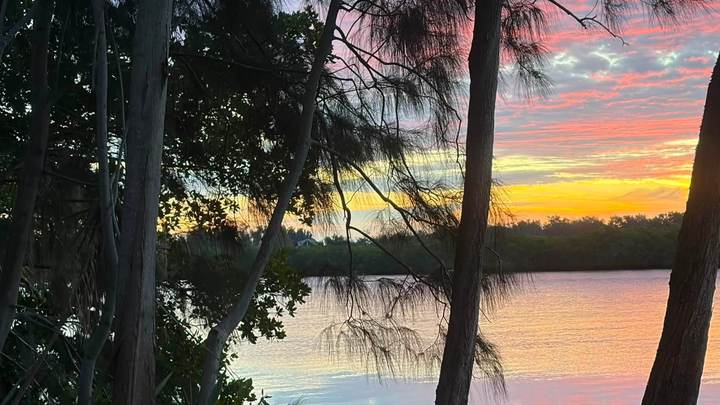
The Land Remembered
Fifty-four acres of old Florida on the Little Manatee River, kept wild for the ospreys, herons, spoonbills, and cranes that have always called it home. Once the planned cameras are in, you will be able to watch it live from wherever you are.
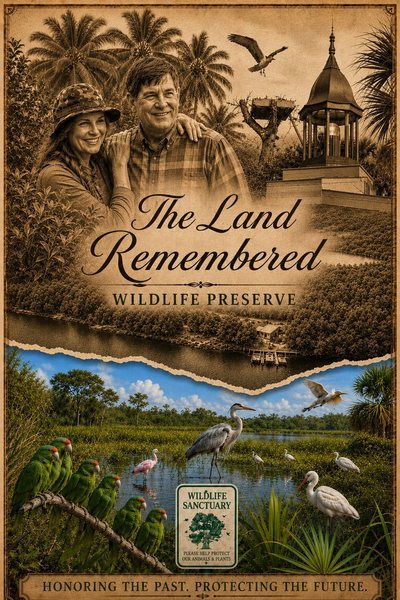
A project of the Canaan Land Foundation, a 501(c)(3) nonprofit · Hillsborough County, Florida

Most preserves ask you to come quietly. This one asks you not to come at all. Rather than let foot traffic scare the birds from their nests, The Land Remembered is working to build a network of fifteen cameras, carried over Starlink, that will record around the clock. Live channels will stream day and night, so the whole world can watch this sanctuary while the land itself stays undisturbed.
A front-row seat, from anywhere on Earth
Fifteen cameras are planned across the preserve, several of them on the osprey platforms. The live channels will be free to watch, for anyone, anywhere, and no one will need to set foot on the land to see them. Until they go live, here is the sanctuary as it has already been caught on camera.
Right now at the sanctuary
- Sky
- Weather
- Nesting season, Tampa Bay
Live readings of local time, sky, weather and river tide predictions (NOAA station 8726436) at thelandremembered.com.
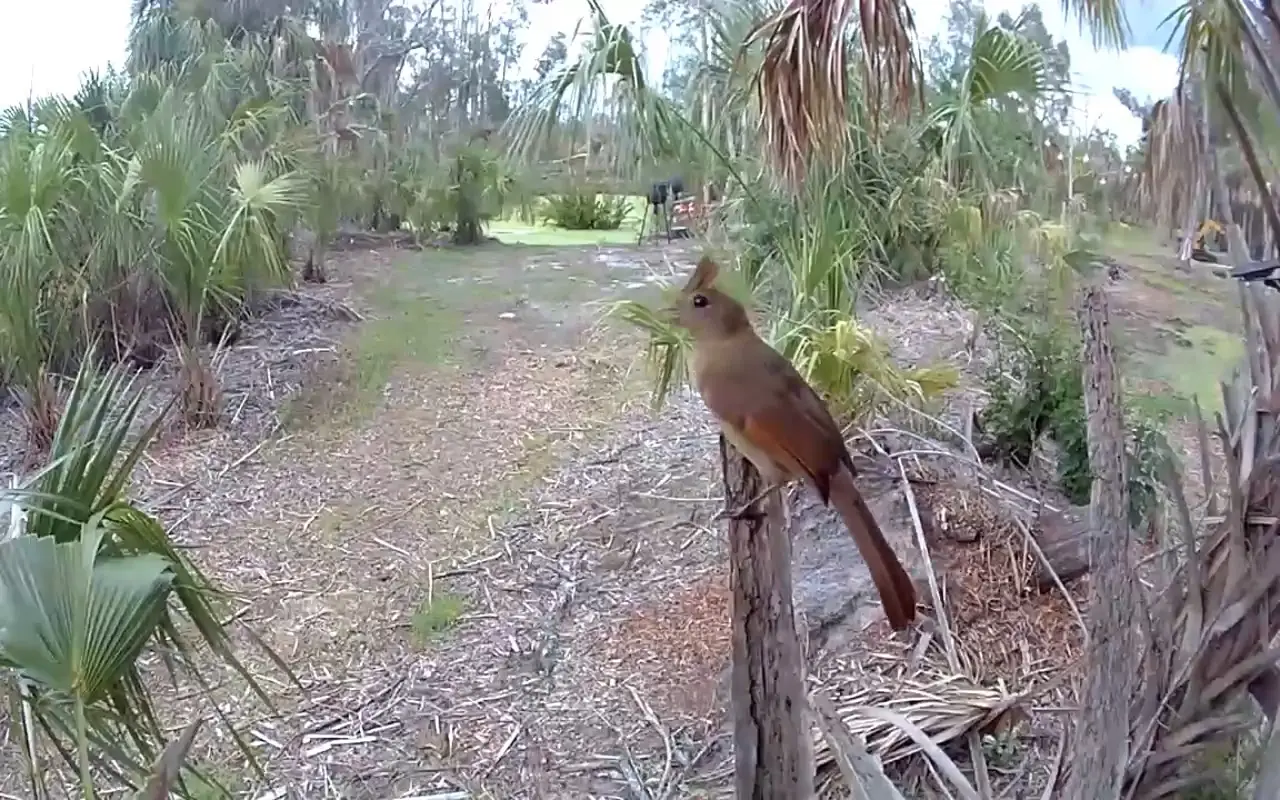
Feeder Post
Jul 14, 2026, 3:39 p.m.
A female northern cardinal drops in, caught by one of the sanctuary’s outdoor cameras.
Recorded at the sanctuary by George Corbett and the outdoor cameras already watching the property. Live streams begin with the Starlink installation.
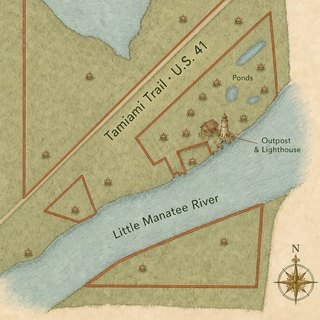
Fifteen cameras planned
See where they will standBuilding the camera network depends on gifts and grants. See how to help.
The sanctuary in figures
On the land today
- Acres kept wild
- 54
- Feet of river frontage
- 5,100
- Nesting sites built
- 36
- Freshwater ponds, replanted
- 3
What the camera network will add, planned
- Cameras in the network
- 15
- Cameras on their own solar power
- 12
- Live channels, around the clock
- 2
From the stewards’ records and the camera network plan, October 2026.
Fifty-four acres the modern world forgot
The Land Remembered sits in southern Hillsborough County, just south of the Little Manatee River bridge, at the signalized intersection of US 41 and Gulf City Road. Its 5,100 feet of frontage face a river the State of Florida has designated an Outstanding Florida Waterway, on its way into Tampa Bay.
Thirty-six nests, and counting
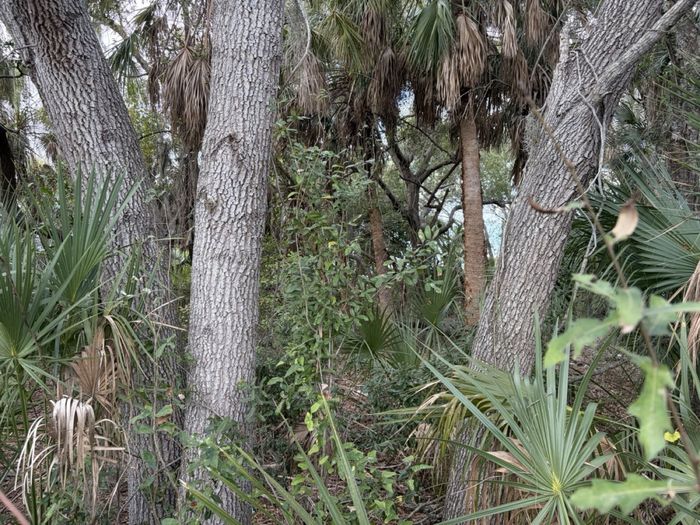
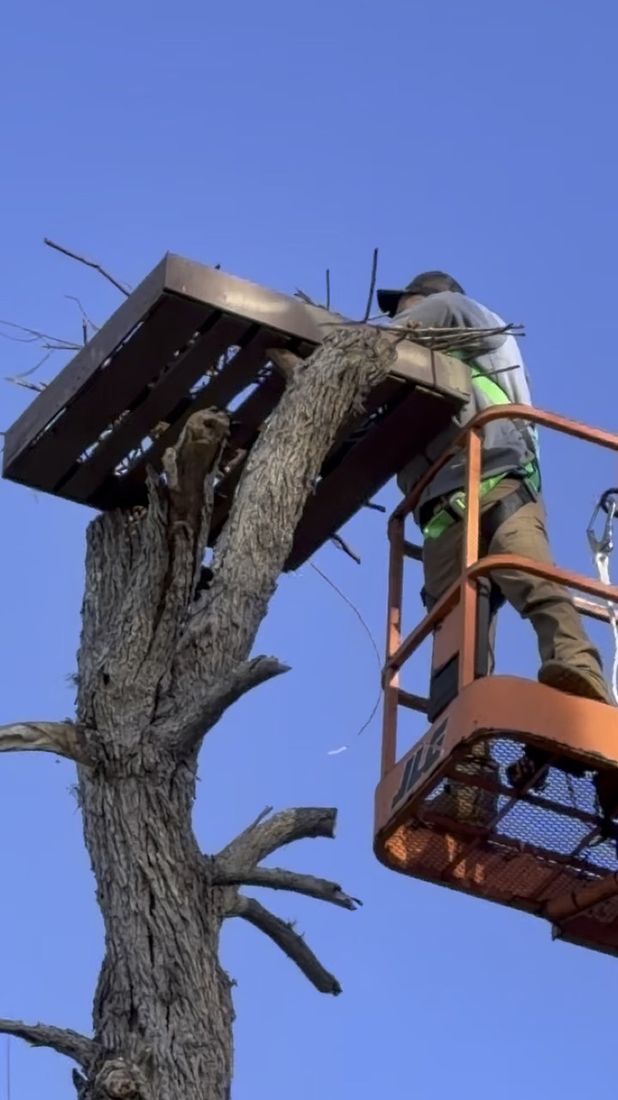
Inside the sanctuary stand 36 nests built for osprey, heron, roseate spoonbill, and sandhill cranes, several of them already occupied, with many other nesting habitats established throughout the property. Ospreys nest on the platforms from December through June.
Three living ponds
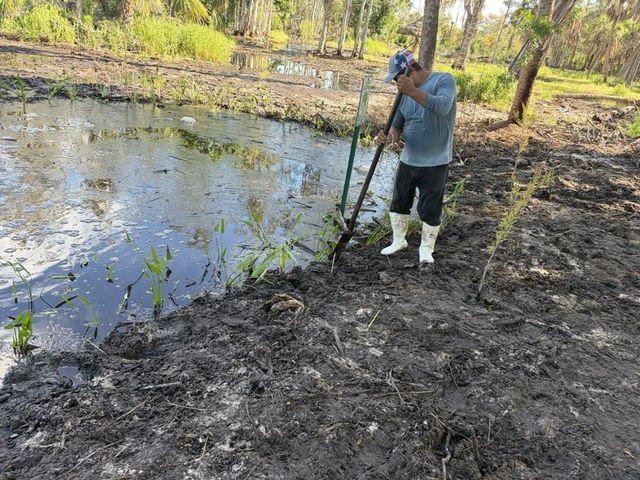
Native aquatic plants and freshwater fish fill three ponds across the preserve. A 400-square-foot octagon observation pavilion overlooks the largest of them, built for quiet viewing.
The aquaponic greenhouse
The Land Remembered has its own 750-square-foot aquaponic greenhouse, where aquatic plants are grown for wetland restoration across the sanctuary, up to 1,000 plants every ten weeks.
The outpost cabin & lighthouse
Included in the sanctuary is the adjoining outpost cabin on the Little Manatee River, with a lighthouse holding an 18th-century rotating Fresnel lens.
How the sanctuary will be watched
The plan calls for fifteen cameras in three zones, carried over a Starlink connection. Twelve run on their own solar power and reach the network by radio, so no cable crosses the highway or the river. Two can pan, tilt and zoom. Every camera records on site, and two live channels stream around the clock.
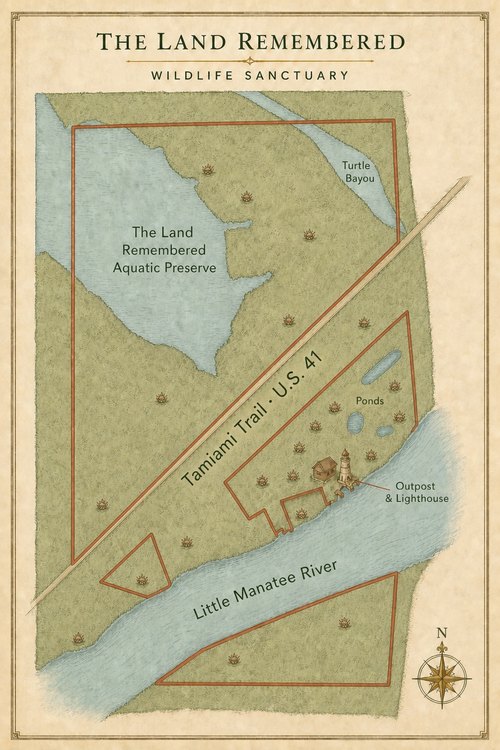
Zone A, the pond strip, eight cameras
Between the highway and the river, the three freshwater ponds and the octagon observation pavilion, with the outpost cabin and lighthouse on the bank.
- 1 Osprey platform, north
- 2 Osprey platform, east
- 3 Osprey platform, pond side
- 4 Osprey platform, riverfront
- 5 Pavilion pond and littoral shelf
- 6 Floating nest island
- 7 Greenhouse and duck nesting area
- 8 Riverfront, steerable
Zone B, the hammock uplands, four cameras
Palm hammock and nesting uplands between the Tamiami Trail and the water.
- 9 Hammock nesting platform, west
- 10 Hammock nesting platform, north
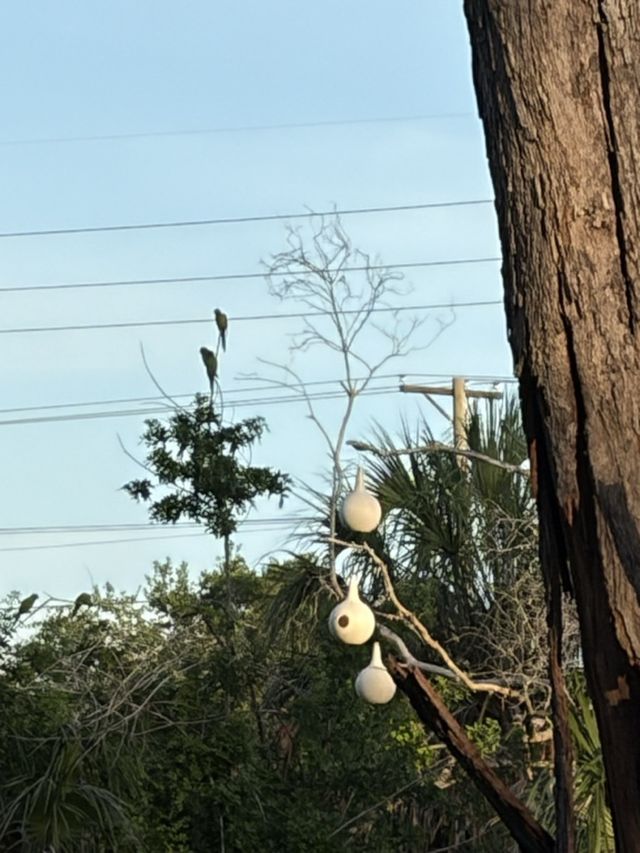
- 11 Martin houses and parrot roost
- 12 Open water vista, steerable
Zone C, the rookery across the river, three cameras
An island all its own, the most secluded habitat for the wading birds.
- 13 Rookery nesting
- 14 Rookery nesting
- 15 Upriver view toward Little Manatee River State Park
Cameras in a dark disc are marked on the map. The cameras on the nesting platforms and the rookery island are listed, not marked.
Free to watch
Every live feed will be free to watch, and free for Hillsborough County schools, educators, and youth programs to use in class, with seasonal coverage of the birds nesting on the land.
Something is always nesting
Typical nesting seasons around Tampa Bay for six birds the sanctuary is built for, drawn from Florida Fish and Wildlife, Audubon Florida, and UF/IFAS records. Nature keeps its own calendar, so timing shifts a little every year.
Typical nesting seasons around Tampa Bay
| Bird | Nesting season | Peak: eggs, chicks and broods | Note |
|---|---|---|---|
| Osprey | December to June | February to May | Nesting can begin in December; most central Florida pairs start in February or March and are done by June. |
| Great blue heron | November to May | No peak given | Tampa Bay colonies start as early as November; eggs can be laid into late May. |
| Sandhill crane | December to August | February to April | Nests from December through summer, mostly February to April. |
| Roseate spoonbill | February to June | No peak given | Tampa Bay colonies nest February through June, later than Florida Bay. |
| Purple martin | March to June | April to May | Scouts return by early February; eggs from late March into June. |
| Black-bellied whistling duck | June to October | August to September | Late nesters; ducklings are out on the water in August and September. |
Months from the Florida Fish and Wildlife Conservation Commission, Audubon Florida, UF/IFAS and the Florida Breeding Bird Atlas.
Plates from John James Audubon’s The Birds of America (1827 to 1838), and by Louis Agassiz Fuertes for John C. Phillips’s A Natural History of the Ducks (1922). Public domain, via Wikimedia Commons and the Biodiversity Heritage Library.
This ground has a long memory
Ferries and pirates, dredge pipes and fossils, a fish camp that held the line for a century. Every era left its mark here, and the land remembered all of it.
Before Florida was Florida
The property is a significant paleontological site from the Ice Age, sitting near the Leisey Shell Pit, recognized as one of the world’s most abundant fossil locations.
The Pious Pirate
This deep-water river harborage is reportedly the stronghold of one of Florida’s most famous pirates, Ben Margoza, known as the “Pious Pirate.”
The Ruskin Ferry
From this site, the original Ruskin Ferry ran from the south shore to the north shore of the river. Until the 1900s, it was the only way to Tampa from the south part of Florida.
The Tamiami Trail
The historic Tamiami Trail was built across this property. Some of the original dredge pipes still rest along the edge of the Little Manatee River.
The Ball Family’s fish camp
The prominent Ball Family operated a restaurant and fish camp here and kept this large tract in its natural state for over a century, an act of quiet preservation that made everything that follows possible.
The Land Remembered
Purchased by the Canaan Land Foundation, the property now begins its next century the way it spent its last one: wild, watched over, and full of wings.
Restoration here is done by hand
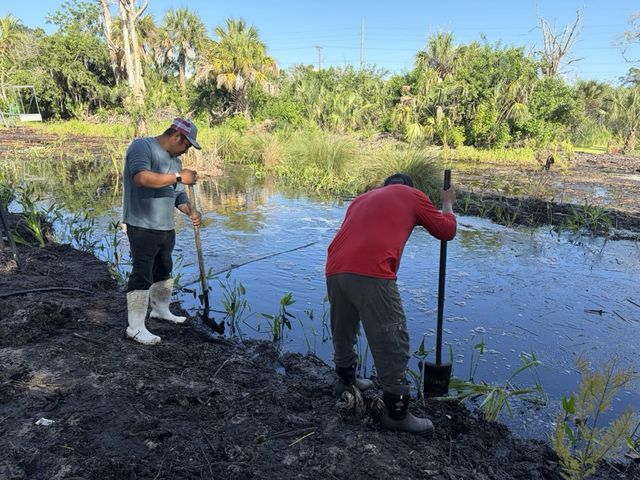
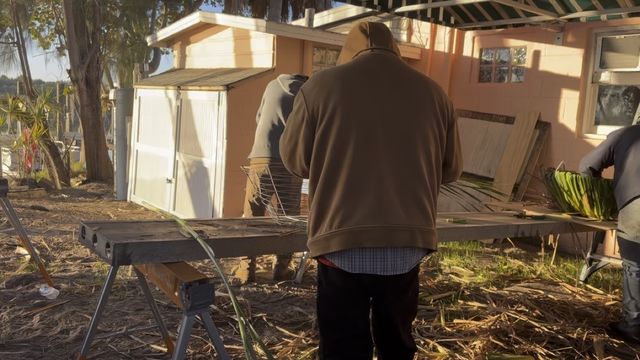
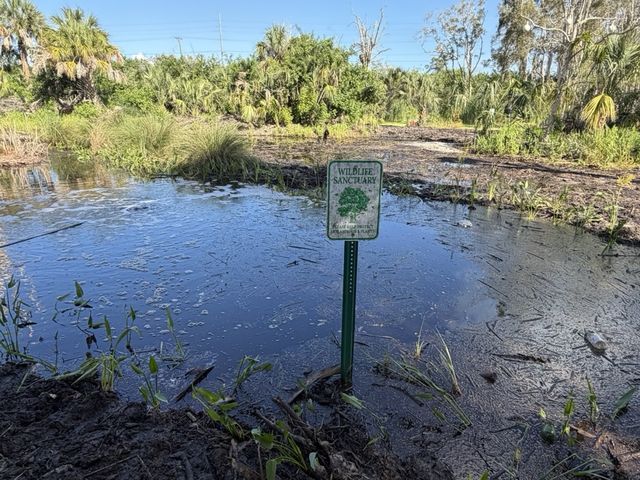
Nest platforms raised into the treetops. Floating nest islands lashed together from bamboo. Ponds cleared of duckweed one rake-load at a time, then replanted with Florida-grown native aquatics. One recent project alone took over 22 hours of hand labor. This is what it looks like to give 54 acres back to the wildlife.
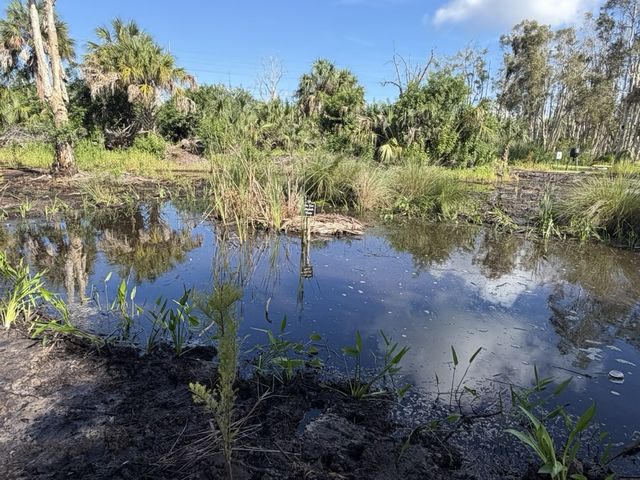
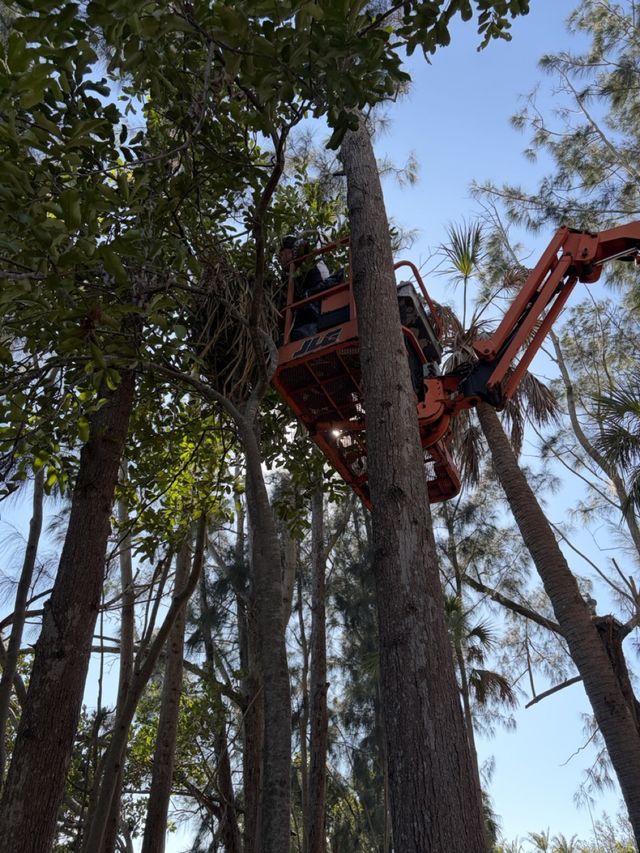
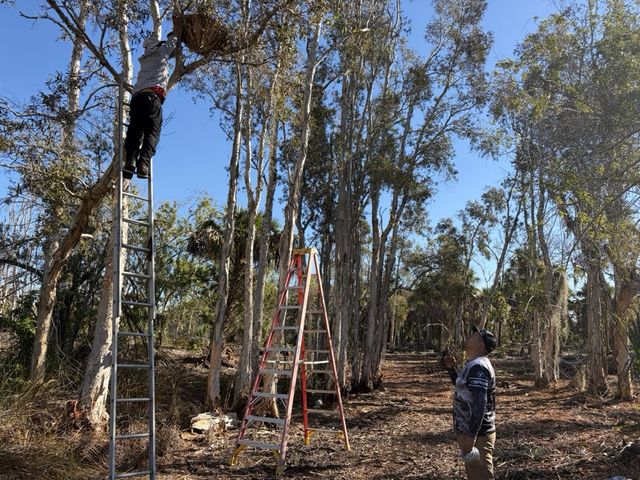
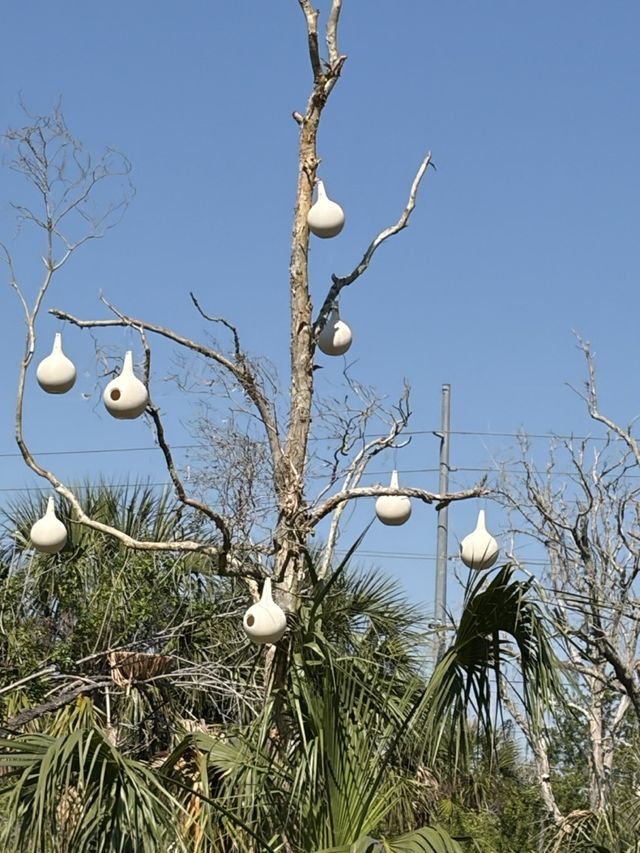
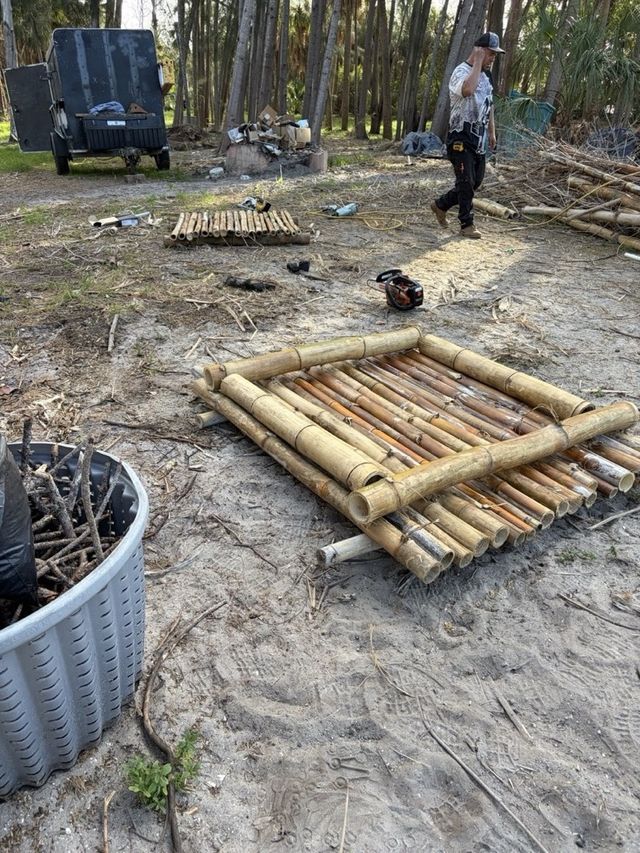
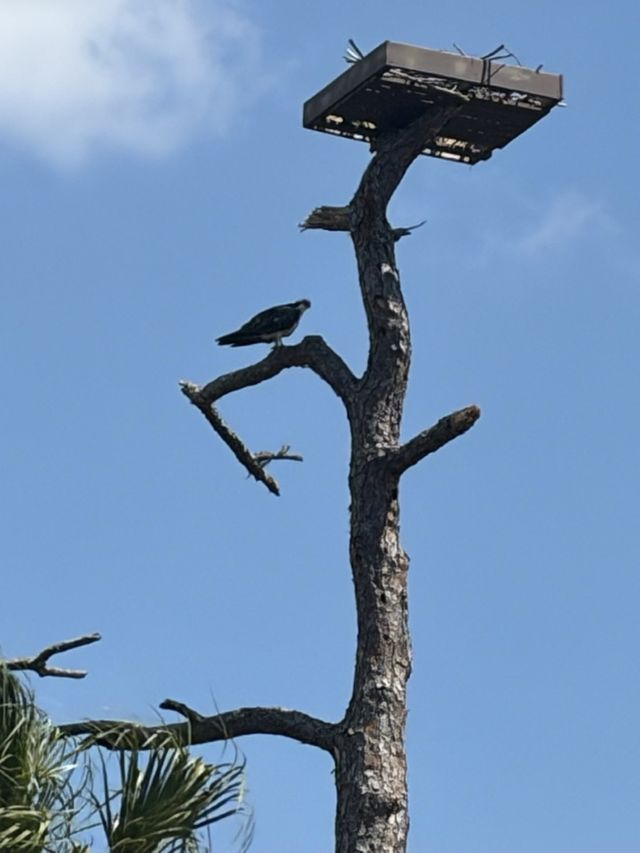
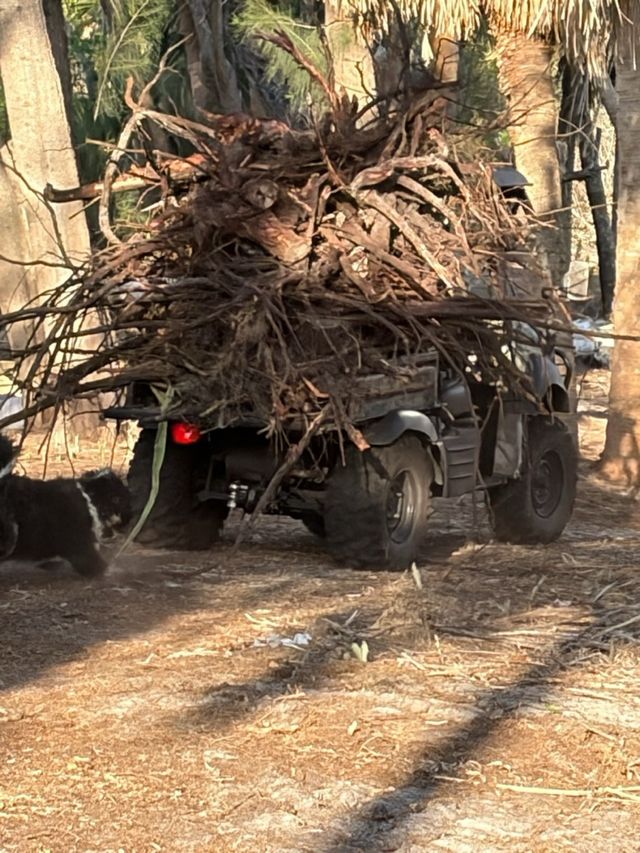
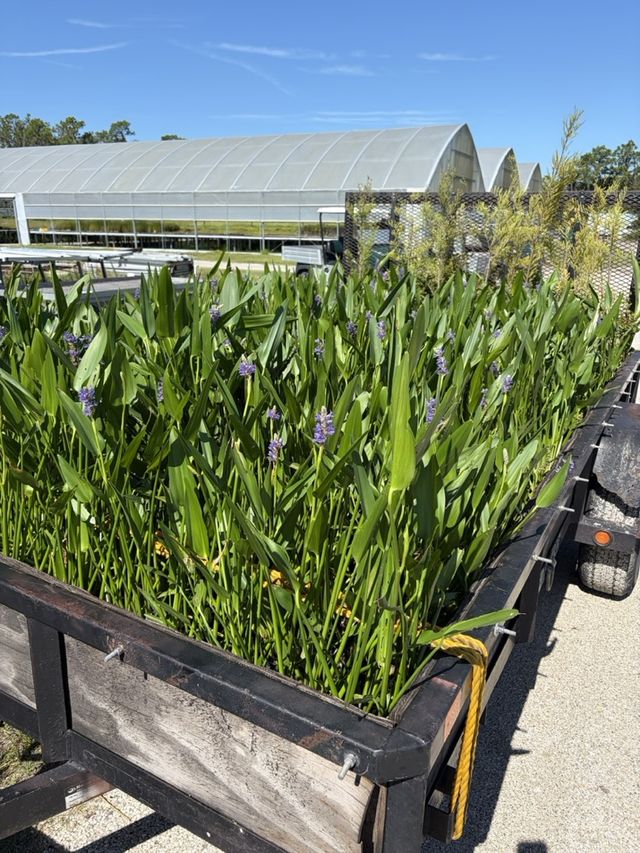
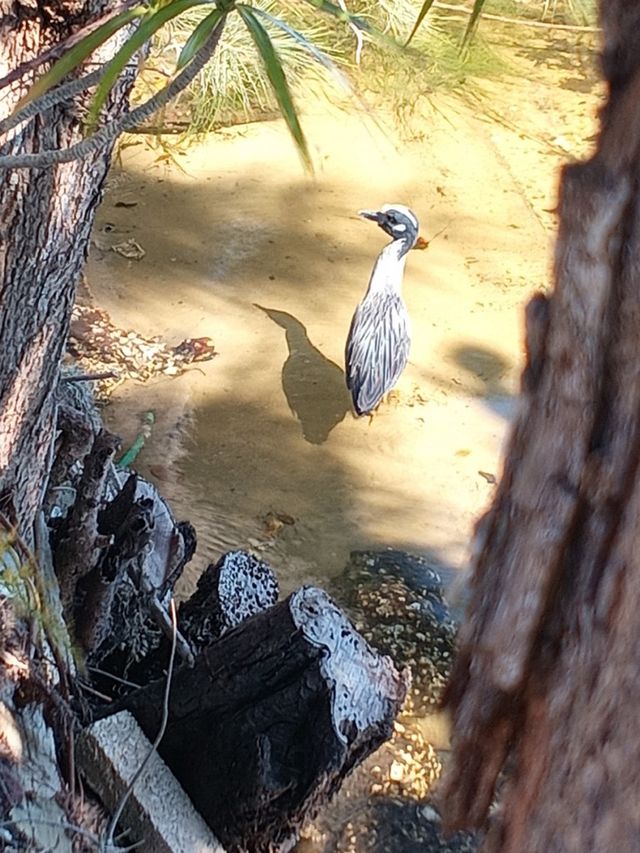
Photographs and field notes from George Corbett, on the ground at the sanctuary.
George & Nancy Corbett
Second-generation Floridians from Miami who grew up in the old Florida landscape of palmettos, aquatic grasses, wetlands, waterfowl, and upland wildlife. Their goal is to preserve this site for the future cultivation of Florida’s natural wildlife.
George was a student of the late Marjory Stoneman Douglas, Florida’s most influential preservationist, who helped spawn his love and passion for wildlife preservation. That passion became a lifetime of it: work with the Trustees of the Internal Improvement Fund on preservation efforts in Manatee Bay in Dade and Monroe Counties, work with the Army Corps of Engineers helping preserve the pelicans of the Port Orange Wildlife Sanctuary, and an appointment to one of Florida’s Water Management Districts, where he served as President in the 1990s.
Nancy grew up in Homestead, where her father was comptroller of Bryant and Lounsbury Farms and was instrumental in upgrading living conditions for migrant workers in the Redlands in the 1950s. She is a direct descendant of one of the 150 original founding families of the Jamestown settlement. George descends from James J. “Gentleman Jim” Corbett, heavyweight champion of the world from 1892 to 1897.
A record of their work
-
1980s
Key Largo
In the 1980s, George built an 8-acre marina in Key Largo using, for one of the first times anywhere, a dock-building method that let the mangroves remain along the entire 5,000 feet of shoreline. No county, state, or federal rule required it. He did it because the habitat mattered.
-
1986
Canaan Land Christian Retreat
Purchased in 1986 and operated for over 40 years, Canaan Land offers vacations at no charge to pastors, missionaries, and full-time Christian workers. The Corbetts restored its centerpiece, the Baccus Lodge, the historic hunting lodge of Henry Ford, Thomas Edison, Harvey Firestone, and John Burroughs.
-
1988
Panthertown Valley, N.C.
The Corbetts were instrumental in preserving the environmentally important Panthertown Valley in Lake Toxaway, N.C., working with the Nature Conservancy, the National Register of Historic Places, and the U.S. Department of the Interior to acquire the 7,000-acre tract, now part of the Nantahala National Forest and one of the rarest, most ecologically important areas in the North Carolina mountains.
-
Lamb Manor Estate, Ruskin
On the Little Manatee River in Ruskin, the Corbetts restored the historic Lamb Manor Estate, listed on the National Register of Historic Places and winner of the Wall Street Journal House of the Year Award in 2015.
Proud members of
The Nature Conservancy, National Wildlife Federation, Florida Wildlife Federation, Friends of the Little Manatee, National Audubon Society, Eagle Audubon Society, Cornell Lab of Ornithology, Friends of the Everglades, Aquaponics Association, The Xerces Society
Help the land keep its promise
Every camera, nest platform, and acre of habitat is sustained by people who believe old Florida is worth keeping. Your gift helps bring the sanctuary’s fifteen cameras online and keeps this shoreline wild for the next hundred years.
Ways to give
Foundations and companies
Corporate and foundation giving is handled by Grant Coordinator Laura Feagle.
canaanlandnc@aol.com
Funders of the camera network will be credited on screen on every public stream, on this site and in the sanctuary’s communications.
By mail
Checks payable to the Canaan Land Foundation
Canaan Land Foundation 1422 Bayshore Road Ruskin, FL 33570Cameras and equipment
Donations of cameras and equipment are welcome by email.
canaanlandnc@aol.com
The Land Remembered is a project of the Canaan Land Foundation, a 501(c)(3) nonprofit organization. Contributions are tax deductible. Online giving is coming soon.
“The Land Remembered sanctuary will be a further testament to God’s bountiful and glorious creation.”
George & Nancy Corbett